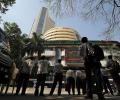
In the past four months, more than 4 million new accounts have been opened, taking the total to 44.3 million.

In the past four months, $7.5 billion has flowed back into domestic stocks, helping the benchmark indices bounce back more than 40 per cent from their 2020 lows.

The V-shaped rebound has been aided by a gush of liquidity flooding the global financial system, thanks to balance sheet expansion.

What worked for the markets was favourable global investor sentiment and encouraging flows into the emerging markets following stimulus measures taken by central banks.

Other measures being considered include relatively stringent KYC norms and a separate standard operating procedure for approval, renewal, and fresh investment from India's neighbouring countries.

The mid-cap universe - comprising firms that rank 101-250 in terms of m-cap - could see as many as 17 new stocks move out. Similarly, over half a dozen stocks could exit the large-cap universe, which is defined as the top 100 entities in terms of m-cap.

Market experts said disruptions caused by the pandemic - to businesses as well as the filing process - and the sharp decline in valuations were the reasons behind fewer new companies wanting to tap the capital markets.

Many believe that the surge in the markets defy economic reality and is being fuelled by aggressive monetary easing by central banks across the world.

This is the fastest the markets have taken to get out of bottom, compared to previous crises.

The rights issue price has been set at Rs 1,257 a share, a discount of nearly 14 per cent to the last closing price of Rs 1,459. The company had set May 14 as the record date for the rights issue, which meant shareholders as on that day would be eligible to apply. Shareholders will be able to apply for one share for every 15 shares held.
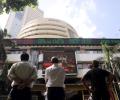
The bulk of the erosion in terms of value took place in India's most-valued firms. For instance, Mukesh Ambani-led Reliance Industries alone has lost Rs 3.8 trillion in m-cap, followed by HDFC Bank, which has seen its value erode by Rs 2.45 trillion and Tata Consultancy Services (TCS), which has lost Rs 1.85 trillion to stand at Rs 6.24 trillion, making it India's most-valued.

'The only thing that is safe right now are government securities.'

Market players said NBFCs and HNIs are recalibrating their plans based on the changing dynamics.
Both indices are down nearly 9 per cent from their all-time highs in mid-January. A sharp reversal seems difficult this time as the peak impact of the virus is yet to play out.

The answer to that depends on whether the globe is able to contain the virus spread, says Samie Modak.

Naved Masood, former secretary in the Ministry of Corporate Affairs and Sebi board member; TV Mohandas Pai, chairman of Manipal Global Education and Dinesh Kanabar, CEO, Dhruva Advisors have ceded their position on the NSE board following end of their tenure.

At issue size of Rs 10,355 cr, the offering will be Asia's biggest this year and fifth-largest domestically.

Amendment to the Act, sovereign guarantees, investment portfolio, realty holdings, and governance issues to shape valuation.

The government holds 90 per cent stake in ITI which is valued at Rs 7,550 crore.

In the past 10 trading sessions, shares of the state-owned company have shot up more than 50 per cent.
 © 2026 Rediff.com - Investor Information - Advertise with us - Disclaimer - Privacy Policy - Sitemap - Feedback - About us - Terms of use - Grievances